Lesson
Title: Pre-computing Age 19th-Century and Components.
Objective:
At the end of this lesson, you will be able to identify the various computing devices since the beginning of computer.
What you should know:
You should be familiar with early counting objects like stones, pebbles, twigs, etc.
Introduction:
During the stone age, that is, before the emergence of 19th-century counting devices, calculators and phones; stones, pebbles, and twigs were used for counting and performing arithmetic calculations.
In this lesson, we will discuss the early counting devices, their founders, and how they were used.
Presentation:
Abacus:
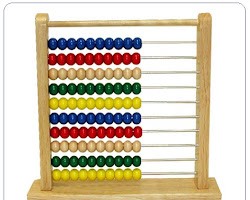
The abacus is one of the oldest calculating devices. It is believed to have originated in Babylonia around 2400 BC. The abacus is a frame with beads strung on wires. The beads are moved to represent numbers. The abacus can be used to perform addition, subtraction, multiplication, and division.
Slide rule:
The slide rule is a mechanical calculating device that was invented in the 17th century. It is used to perform multiplication, division, and other calculations. The slide rule consists of two logarithmic scales that slide past each other. The user moves the scales until the desired numbers are aligned, and then reads the result off the scales.
Napier's bones:
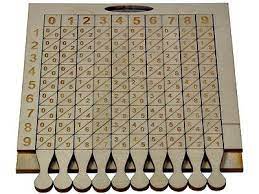
Napier's bones are a set of rods that were invented by John Napier in the 16th century. They are used to perform multiplication and division. Napier's bones consist of a set of rods, each with a different number of raised bumps on it. The user aligns the rods so that the bumps match, and then reads the product or quotient off the rods.
Pascal's calculator:
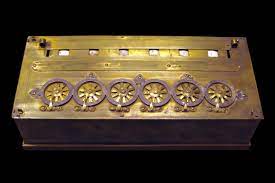
The Pascal's calculator is a mechanical calculating device that was invented by Blaise Pascal in the 17th century. It is the first calculator that could add and subtract. The Pascal's calculator consists of a series of gears that are turned by a crank. The gears add or subtract the numbers that are entered into the calculator.
Leibniz's calculator:
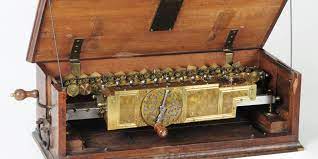
The Leibniz's calculator is a mechanical calculating device that was invented by Gottfried Leibniz in the 17th century. It is the first calculator that could multiply and divide. The Leibniz's calculator consists of a series of gears and wheels that are turned by a crank. The gears and wheels multiply or divide the numbers that are entered into the calculator.
Jacquard loom:
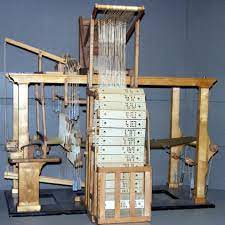
The Jacquard loom is a mechanical loom that was invented by Joseph Marie Jacquard in the early 19th century. It is the first loom that could be programmed to weave complex patterns. The Jacquard loom uses punched cards to control the raising and lowering of the warp threads.
Charles Babbage's Analytical Engine:
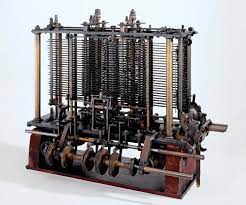
The Analytical Engine is a mechanical computer that was designed by Charles Babbage in the mid-19th century. It is considered to be the first general-purpose computer. The Analytical Engine uses a series of gears and wheels to perform addition, subtraction, multiplication, division, and other calculations. It can also be programmed to perform more complex operations.
Summary/Conclusion:
The above devices are just a few of the early computing devices that were invented in the 19th century. These devices laid the foundation for the development of modern computers.
Exercise:
Mention 3 early devices, the name of their inventors, and how they were used.